

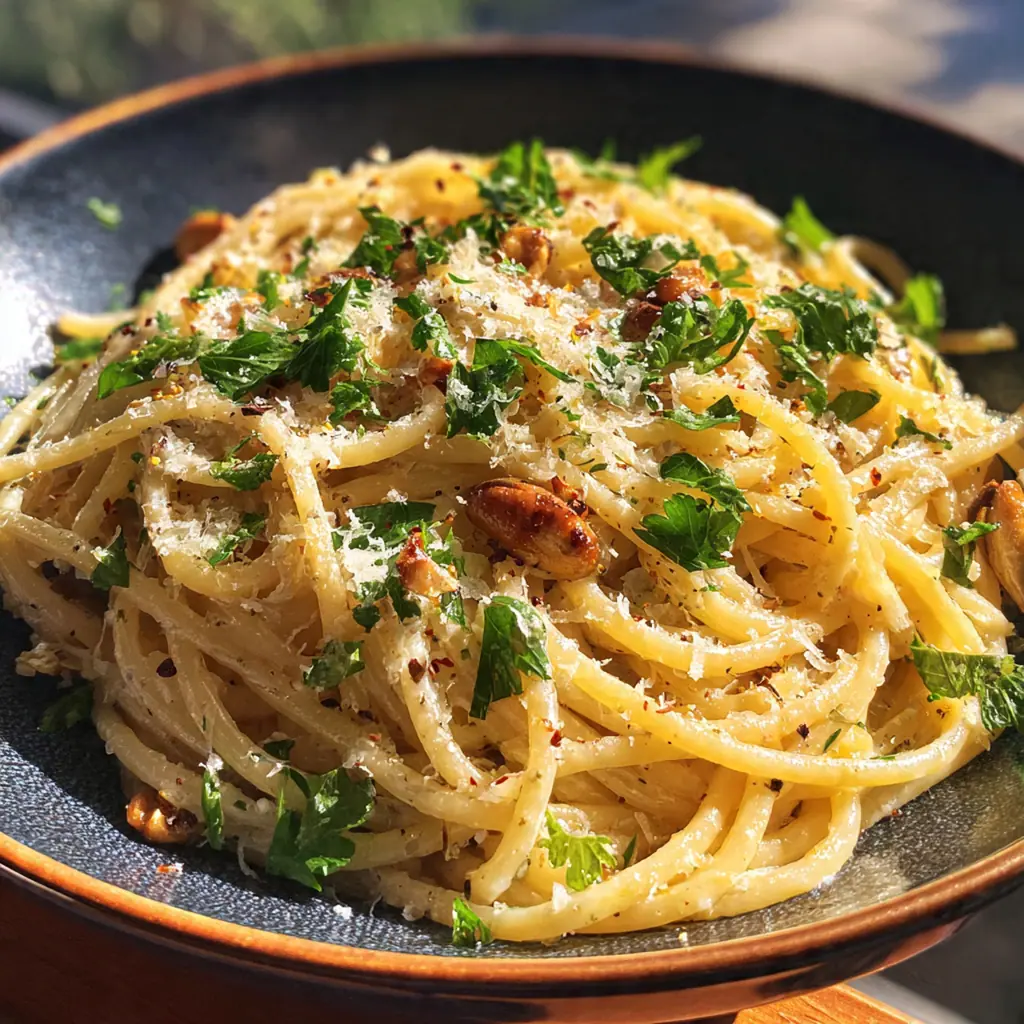
This Creamy Chestnut Garlic Pasta brings a uniquely comforting and savory flavor to your winter table, inspired by the rustic kitchens of Northern Italy where chestnuts are a cherished seasonal staple. It’s a vegetarian dish that feels incredibly special, transforming simple roasted garlic and nutty chestnuts into a velvety sauce that clings to every wide noodle. I first made this for a cozy holiday dinner, and its rich, aromatic warmth instantly became a cold-weather favorite. You’ll love how the sweet roasted garlic and earthy rosemary create a sauce that’s both familiar and excitingly new.
Why You'll Love This Recipe
- Incredibly rich and satisfying without any meat
- Unique sweet and savory flavors from roasted garlic and chestnuts
- Feels like a restaurant dish but is totally doable at home
- Perfect for impressing guests or a special date night
- I always make a double batch for the best leftovers
Ingredients You’ll Need
- Whole head of garlic: roasting transforms it into a sweet, spreadable paste that forms the deep savory base of your sauce, look for a firm head with tight, papery skin.
- Extra-virgin olive oil: a good drizzle helps the garlic caramelize perfectly in the oven and adds fruity depth to the initial sauté.
- Steamed and peeled chestnuts: their starchy, slightly sweet flavor is the star, vacuum-packed versions often have a better texture than jarred for a creamier blend.
- Unsalted butter: divided use builds layers of flavor, first for sautéing the aromatics and then blended in for an unbeatable silky finish.
- Large shallot: finely chopped it melts into the sauce providing a gentle oniony sweetness without overpowering the other ingredients.
- Fresh rosemary: just a teaspoon finely chopped infuses the entire dish with its piney fragrance, a perfect pairing for earthy chestnuts.
- Dry white wine: deglazes the pan, lifting all those tasty browned bits, and adds a bright acidic note that balances the richness.
- Low-sodium vegetable broth: forms the liquid base of the sauce, using low-sodium lets you control the final seasoning perfectly.
- Heavy cream: blended in at the end creates that luxurious, dreamy texture you want in every bite.
- Finely grated Parmesan cheese: it melts seamlessly into the warm sauce adding a salty, umami punch that enhances every other flavor.
- Freshly grated nutmeg: a tiny amount works magic with creamy sauces, adding a warm, subtle complexity that just feels right.
- Pappardelle or fettuccine: the wide, flat shape is ideal for catching and holding onto the thick, velvety sauce.
- Fresh flat-leaf parsley: the pop of fresh green color and herby brightness at the end lifts the whole dish.
How to Make It
Roast the Garlic:
Preheat your oven to 400°F. Slice the top off a whole garlic head, drizzle it with oil, and wrap it tightly in foil. Roasting it until soft and golden brown is non-negotiable for that deep, caramelized sweetness that defines the sauce. Let it cool just enough so you can handle it, then squeeze the cloves right into a bowl.
Prep Your Chestnuts and Pasta Water:
While the garlic roasts, roughly chop half your chestnuts for garnish later and leave the other half whole for the sauce. This gives you wonderful textural contrast. Also, get a large pot of generously salted water boiling for your pasta – salting it well is your first chance to season the noodles themselves.
Sauté the Aromatics:
In a large, deep skillet, melt half your butter over medium heat. Add the chopped shallot and cook it until it’s soft and translucent, which takes about three to four minutes. Stir in the rosemary and let it cook for just a minute until your kitchen smells amazing.
Build the Sauce Base:
Pour in your white wine, using your spoon to scrape up any tasty bits stuck to the pan. Let it simmer and reduce by about half. Now, add the whole chestnuts (not the chopped ones), your soft roasted garlic cloves, and all the vegetable broth. Bring it to a simmer, cover it, and let it cook for ten minutes so all the flavors get to know each other.
Blend Until Velvety Smooth:
Very carefully transfer the hot mixture to a blender. Add the heavy cream and the remaining butter. Blend it on high for a full minute or two until it’s completely smooth and luxurious. This hot blending step is the secret to that restaurant-quality texture. Pour the smooth sauce back into your skillet and whisk in the grated Parmesan and nutmeg.
Cook the Pasta and Combine:
Cook your pappardelle in the boiling water until it’s just al dente. Right before you drain it, scoop out about a cup of that starchy pasta water – it’s liquid gold for finishing your sauce. Add the drained pasta directly to the skillet with your warm chestnut sauce.
Toss and Finish:
Use tongs to gently toss the pasta, coating every strand thoroughly. You’ll likely need to add a few splashes of that reserved pasta water to loosen the sauce to a perfect, creamy consistency that clings to the noodles. Fold in the reserved chopped chestnuts and half of your parsley.
Serve Immediately:
Divide the creamy pasta among warm bowls. Finish it with the remaining parsley, extra Parmesan, and if you’re using them, those toasted walnuts for a nice crunch. A final little crack of black pepper or pinch of flaky sea salt on top makes it perfect.
You Must Know
- Roasting the garlic fully is the flavor foundation
- Always save a cup of starchy pasta water
- Blend the sauce while it’s still hot for best results
- The chopped chestnuts at the end add great texture
- It tastes even better the next day
Storage Tips
Store any leftovers in an airtight container in the fridge where they’ll stay good for up to three days. The sauce will thicken up quite a bit once chilled, so the best way to reheat is gently in a skillet over low heat with a generous splash of broth, water, or even a little milk, stirring until it’s creamy and warm again. I don’t recommend freezing this one as the dairy can separate and the texture won’t be the same.
Ingredient Substitutions
If you can’t find pre-peeled chestnuts, you can roast and peel your own, but the prepared ones are a huge time-saver. For the white wine, a dry vermouth works beautifully, or you can just use an extra quarter cup of broth with a tiny squeeze of lemon. Don’t have shallot? A small yellow onion works fine, just chop it super fine. For a dairy-free version, use a high-quality plant-based butter, swap the heavy cream for an unsweetened, creamy oat milk, and use nutritional yeast or a vegan Parmesan instead of the dairy cheese.
Serving Suggestions
I love balancing the richness of this pasta with a simple, peppery arugula salad dressed in nothing but lemon juice, olive oil, salt, and pepper – the acidity cuts through perfectly. A glass of the same crisp white wine you cooked with, like a Pinot Grigio, is the ideal pairing, or a light-bodied red like Pinot Noir if you prefer. And you absolutely must have some crusty, warm bread on the table for soaking up every last bit of that incredible sauce from your plate.
Cultural Context
This dish draws inspiration from the alpine and northern regions of Italy, where foraged chestnuts, or ‘castagne’, have been a vital staple for centuries, often dried and milled into flour during leaner months. Transforming them into a rich, creamy sauce for pasta is a beautiful example of cucina povera, or ‘poor kitchen’ ingenuity, making something luxurious from humble, seasonal ingredients. The technique of roasting garlic to sweet, mellow perfection and using a soffritto of shallot and herbs is classically Italian, creating a depth of flavor that feels both rustic and refined.
Pro Tips
- Use vacuum-packed chestnuts if you can find them
- Let the roasted garlic cool just enough to handle
- Season the sauce well before adding the pasta
- A high-powered blender gives the smoothest result
- That flaky sea salt finish is a game-changer
Frequently Asked Questions
Wide, flat noodles like pappardelle or fettuccine are ideal for this rich sauce. Their broad surface area helps the creamy chestnut and garlic sauce cling perfectly to every bite, ensuring maximum flavor in each forkful.
You can prepare the sauce 1-2 days ahead and store it in the refrigerator. Gently reheat it on the stovetop, adding a splash of broth or cream to loosen it. For the best texture, cook the pasta fresh just before serving.
For a lighter version, full-fat coconut milk or cashew cream can work, though they’ll alter the flavor profile. For richness without cream, try blending in more of the roasted chestnuts with extra vegetable broth until luxuriously smooth.
The garlic is ready when the cloves are soft, golden, and easily squeeze out of their skins. This sweet, caramelized flavor is essential for the sauce’s depth, so roast until tender and fragrant—about 30-40 minutes at 400°F.
Pair this rich pasta with a crisp arugula salad with lemon vinaigrette to cut the creaminess. For an Italian-inspired feast, add roasted Brussels sprouts and a glass of the Pinot Grigio used in the sauce.