

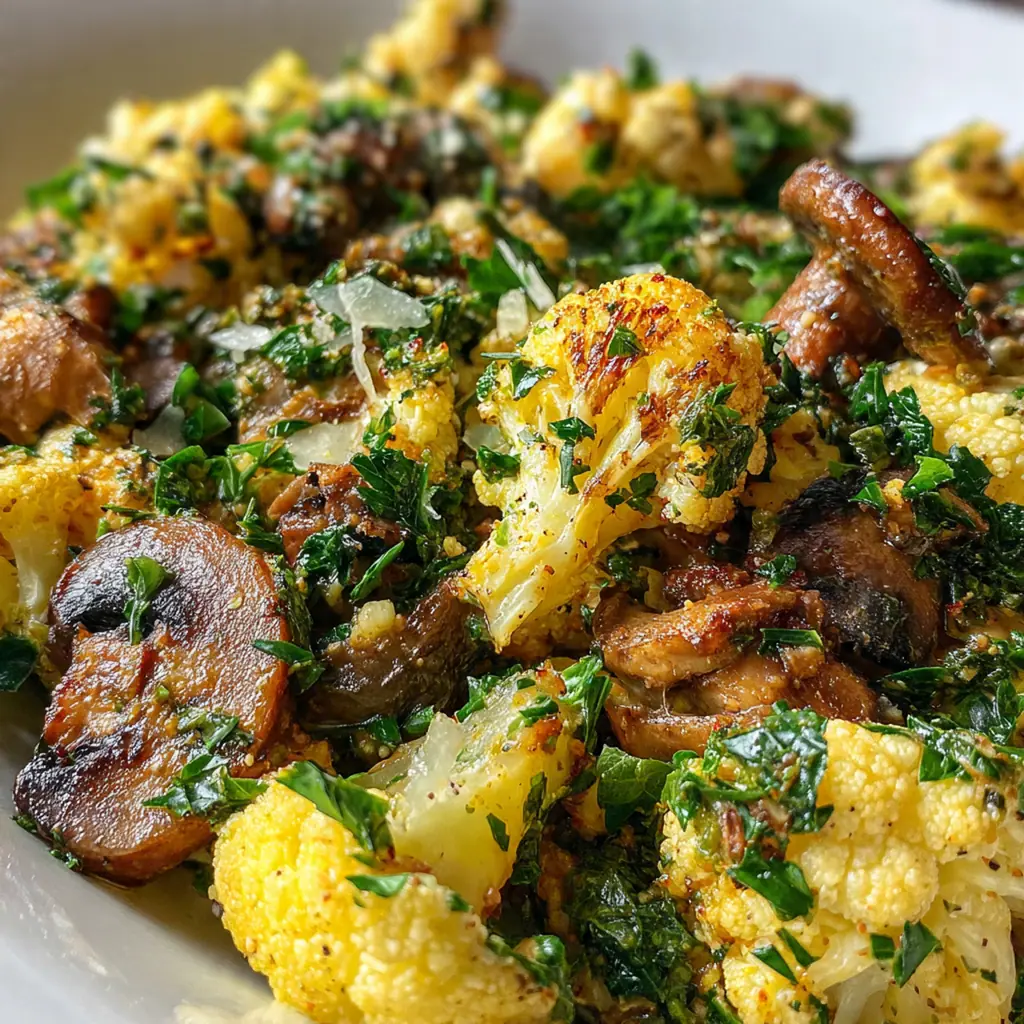
This garlic cauliflower mushrooms savory sauté is my go-to celebration for any successful forage, turning a unique wild find into a simple, comforting meal. It’s a wonderfully rustic American dish that highlights the mushroom’s delicate, coral-like texture with aromatic garlic and fresh herbs. You’ll love how quickly it comes together, transforming humble ingredients into something truly special. Its versatility means you can enjoy it as a side, over pasta, or just with crusty bread to soak up every savory drop.
Why You'll Love This Recipe
- Ready in under 35 minutes for a quick and satisfying weeknight meal
- Highlights the delicate, unique texture of fresh foraged cauliflower mushrooms
- Packed with deep savory flavor from garlic, thyme, and a hint of white wine
- Versatile enough to be a side, a pasta topper, or a main with polenta
- It’s become my favorite way to showcase a mushroom haul
Ingredients You’ll Need
- Fresh cauliflower mushrooms: their unique coral-like structure soaks up all the savory flavors, look for firm, dry clusters with a fresh, earthy smell and avoid any that feel slimy.
- Extra-virgin olive oil: forms the flavorful base of the sauté, a good quality oil adds fruitiness that complements the mushrooms beautifully.
- Unsalted butter: adds a rich, silky depth to the sauce and helps the shallots and garlic caramelize perfectly.
- Large shallot: provides a sweet, aromatic base that’s gentler than onion, letting the mushroom and garlic flavors shine through.
- Garlic cloves: the star aromatic that gives the dish its name, fresh minced garlic is non-negotiable for that punch of flavor.
- Fresh thyme leaves: offer herbal, slightly floral notes that pair classically with mushrooms, you’ll smell it the moment it hits the pan.
- Dry white wine: deglazes the pan and adds a layer of bright acidity, choose a crisp sauvignon blanc or pinot grigio you’d enjoy drinking.
- Vegetable broth: creates a light sauce and helps steam the mushrooms just enough without making them soggy, low-sodium is best for control.
- Fresh lemon juice: a final splash of acidity that wakes up all the other flavors and keeps the dish feeling fresh.
- Freshly grated Parmesan cheese: melts into the sauce for umami richness and a slight saltiness, always grate it yourself for the best melt.
- Kosher salt: enhances every layer of flavor, its coarse texture makes it easy to control how much you’re adding.
- Freshly ground black pepper: adds a gentle heat and earthiness that rounds out the savory garlic and herbal notes perfectly.
- Chopped fresh parsley: a final pop of color and fresh green flavor that makes the whole dish look and taste finished.
How to Make It
Prepare the Mushrooms:
Gently clean your cauliflower mushrooms with a soft brush or a barely damp paper towel. Tearing them into bite-sized pieces by hand is better than cutting, as it follows their natural structure and creates more surface area for browning. Discard any woody or tough stem ends you find.
Prep Your Aromatics:
Take a moment to mince the garlic, finely chop the shallot, and pick the thyme leaves from their stems. Having everything ready to go makes the cooking process smooth and fast, so you don’t risk burning the garlic while you search for your next ingredient.
Heat the Fat:
Combine the olive oil and butter in your largest skillet over medium heat. You want the butter to melt and just start foaming, which tells you the pan is perfectly hot and ready to cook your shallot without burning the butter.
Sauté the Shallot:
Add the chopped shallot to the foaming butter and oil. Cook it, stirring now and then, until it turns soft and translucent. This gentle cooking builds a sweet, flavorful foundation for the entire dish.
Brown the Mushrooms:
Turn the heat up to medium-high and add all the torn mushrooms. Let them sit undisturbed for a couple minutes to get a good sear, then stir occasionally. You’re waiting for them to release their moisture and turn a beautiful golden brown, which builds incredible flavor.
Add Garlic and Thyme:
Stir in the minced garlic and fresh thyme leaves. Cook for just about a minute until the air is incredibly fragrant. Keep it moving to prevent the garlic from taking on any bitter, burnt notes.
Deglaze with Wine:
Pour in the white wine—it will sizzle dramatically. Use your spoon to scrape up all those delicious browned bits stuck to the pan. Let the wine simmer and reduce by about half, which concentrates its flavor and cooks off the alcohol.
Simmer with Broth:
Add the vegetable broth and bring everything back to a lively simmer. Let it cook for about five minutes so the liquid reduces slightly and the mushrooms finish cooking through, becoming tender and infused with all the savory goodness.
Finish and Season:
Take the skillet off the heat. Stir in the fresh lemon juice and the grated Parmesan until the cheese melts into a silky sauce. Now taste it—this is when you add the salt and pepper, adjusting carefully because the Parmesan already adds saltiness.
Garnish and Serve Immediately:
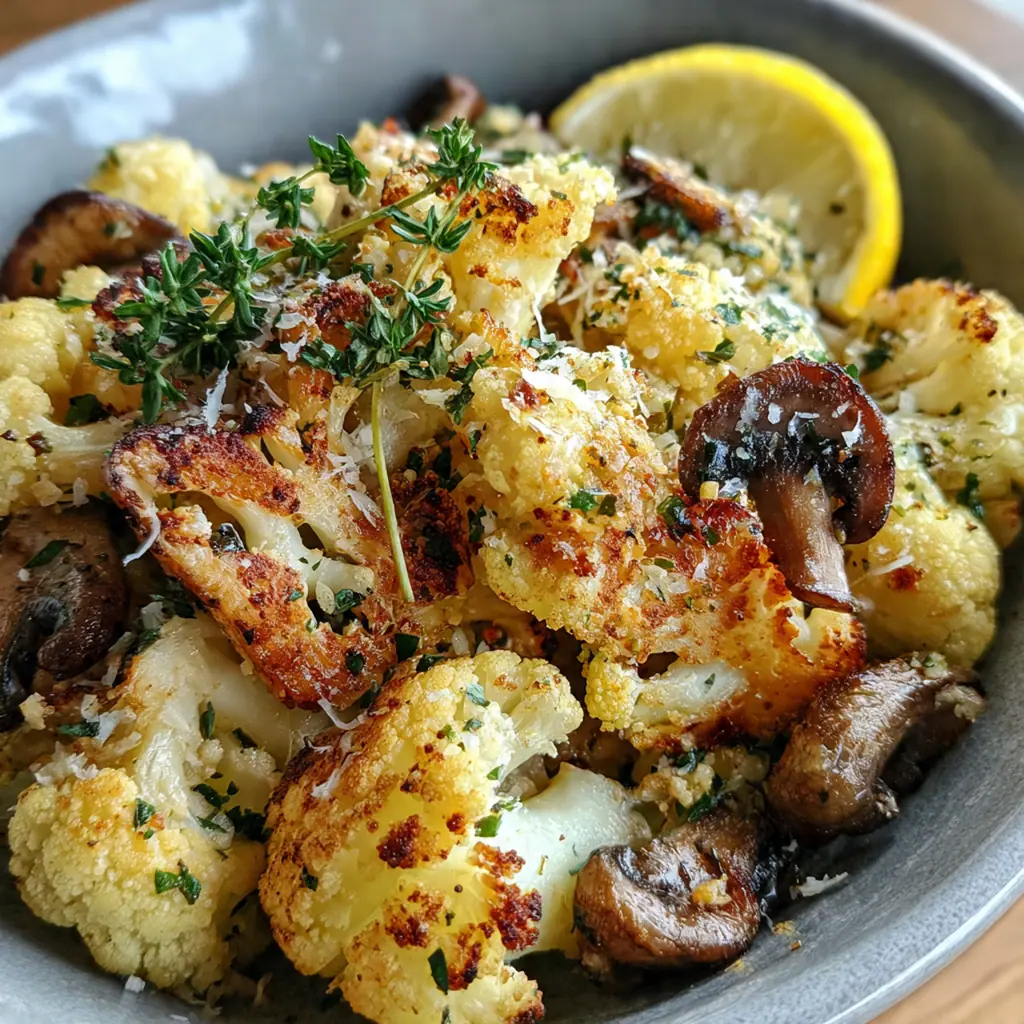
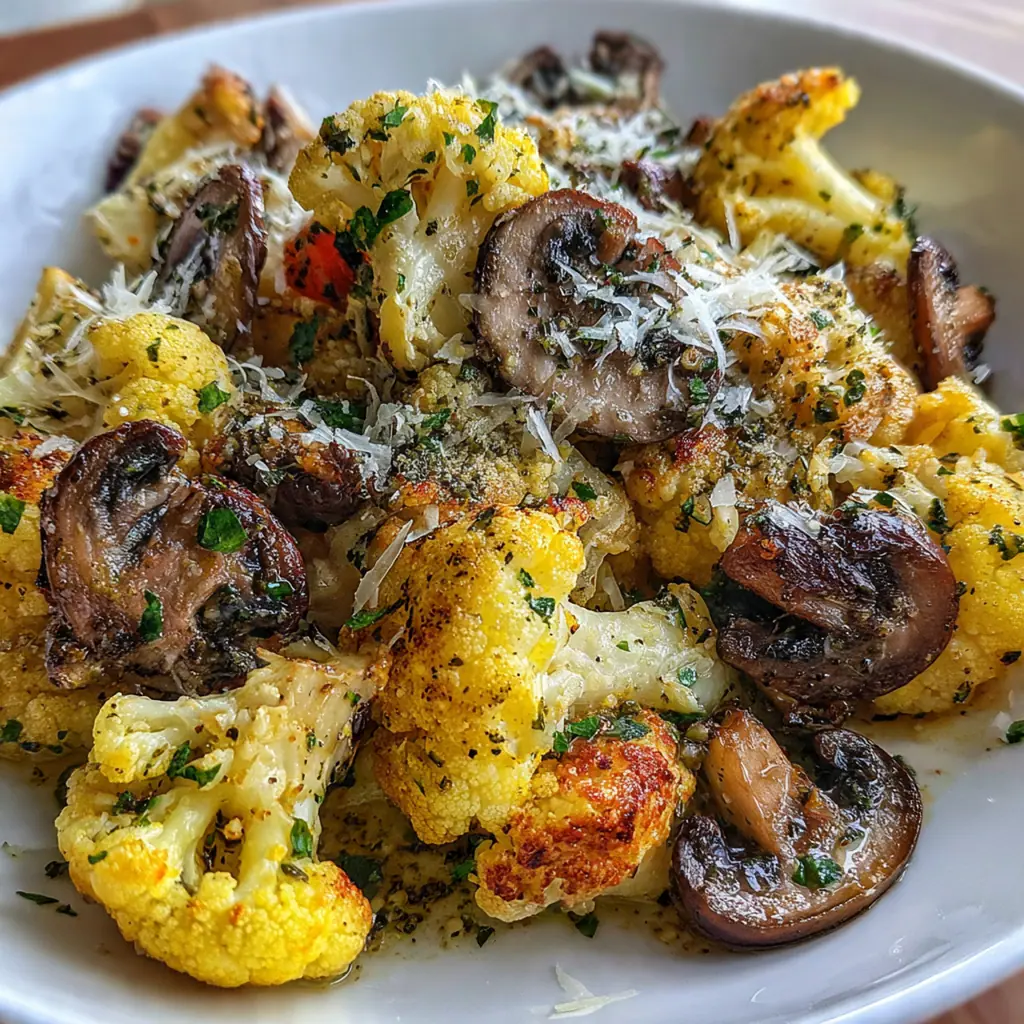
Sprinkle the chopped fresh parsley all over the top and dish it up right away. This garlic cauliflower mushrooms savory sauté is best enjoyed hot, while the textures are perfect and the aromas are at their peak.
You Must Know
- Clean mushrooms gently with a brush to keep their texture perfect
- High heat is essential for getting that golden brown color and flavor
- Don’t overcrowd the pan, cook in batches if your skillet isn’t big enough
- The splash of white wine makes a world of difference, don’t skip it
- I always double this recipe because leftovers disappear fast
Storage Tips
Store any leftovers in an airtight container in the refrigerator, where they’ll keep well for up to three days. When you’re ready to enjoy them again, reheat gently in a skillet over low heat. You might need to add a tiny splash of water or broth to loosen the sauce and refresh the consistency. I don’t recommend freezing this dish, as the mushrooms can become mushy and the delicate sauce may separate upon thawing.
Ingredient Substitutions
If you can’t find fresh thyme, use about half a teaspoon of dried thyme, but add it with the shallot so it has time to rehydrate and bloom. For a dairy-free version, simply swap the butter for more olive oil and leave out the Parmesan—a sprinkle of nutritional yeast can add a similar savory note if you like. No shallot? A small sweet onion works in a pinch, just chop it finely. If you prefer not to cook with wine, substitute it with an equal amount of additional vegetable broth and a squeeze of lemon for the acidity.
Serving Suggestions
I love serving this over a bowl of creamy polenta or soft scrambled eggs for a luxurious breakfast. For dinner, toss it with cooked fettuccine or pappardelle and a bit of the pasta water to make a quick sauce. It’s also incredible piled onto thick slices of toasted sourdough or alongside a simple seared chicken breast or piece of fish. A crisp green salad with a sharp vinaigrette on the side balances the richness perfectly.
Cultural Context
This dish taps into the rustic, foraged food tradition that’s deeply rooted in American cooking, especially in regions where mushroom hunting is a seasonal pastime. It follows a simple, timeless formula: sauté wild mushrooms with garlic and herbs to let their unique character take center stage. You’ll find similar preparations in many European cuisines, from Italy to France, but this version with its use of Parmesan and white wine leans into a comforting, home-style approach that makes the most of a special ingredient without fuss. It’s a celebration of simplicity and flavor.
Pro Tips
- Grate your own Parmesan for the best melt and flavor
- Let the mushrooms sear without stirring for those tasty browned bits
- Taste before adding extra salt because the cheese is salty
- Fresh herbs really are key here, they make the dish sing
- My secret is a final extra grind of black pepper on top
Frequently Asked Questions
If you don’t have fresh thyme, you can use 3/4 teaspoon of dried thyme added with the garlic. Alternatively, other fresh herbs like rosemary (use 1 teaspoon, finely chopped) or oregano would work beautifully. The fresh thyme’s earthy flavor complements the mushrooms perfectly, so try to use it if possible.
Yes, you can prepare this dish up to 2 days in advance. Let it cool completely, then store it in an airtight container in the refrigerator. Reheat gently in a skillet over medium heat, adding a tablespoon of broth or water to refresh the texture and loosen the sauce before serving.
If you prefer not to cook with wine, you can substitute an equal amount of additional vegetable broth mixed with 2 teaspoons of fresh lemon juice or white wine vinegar. This will provide the necessary acidity to balance the rich, savory flavors of the mushrooms and garlic.
The dish is ready when the mushrooms are tender, golden brown, and the liquid in the pan has reduced to a glossy sauce that coats them. This usually takes about 10-12 minutes of sautéing after adding the broth. The mushrooms should not be soggy but pleasantly tender with a slight bite.
As a classic American side dish, it pairs wonderfully with grilled steak, roast chicken, or seared fish. For a vegetarian meal, toss it directly with hot pasta, creamy polenta, or risotto. It’s also fantastic spooned over crusty bread or served alongside mashed potatoes for ultimate comfort food.