


Grilled salmon mango coconut is my go-to summer dish that feels like a vacation on a plate. This Hawaiian-inspired recipe features tender salmon topped with a vibrant mango salsa and drizzled with rich coconut milk. It’s a harmony of sweet, savory, and creamy elements that comes together in just 30 minutes. I make it for friends and family whenever I want to impress without stress.
Why You'll Love This Recipe
- Weeknight dinner ready in just 30 minutes from start to finish
- Fresh tropical flavors that transport you to a beachside getaway
- Packed with healthy omega-3s and good fats from coconut
- It looks fancy but requires minimal effort to pull off
Ingredients You’ll Need
- Salmon fillets: Opt for wild-caught for best texture and flavor; skin-on helps it stay moist on the grill.
- Olive oil: Quality olive oil creates a nice sear and adds fruity notes to the marinade.
- Fresh lime juice: Fresh lime juice is key for bright acidity in both the marinade and salsa.
- Garlic cloves: Fresh minced garlic gives the marinade a savory, aromatic depth.
- Grated fresh ginger: Fresh ginger adds a warm, spicy kick that complements the tropical flavors.
- Salt: Kosher salt seasons everything evenly for balanced taste.
- Black pepper: Fresh ground pepper adds a subtle heat.
- Ripe mango: Choose a ripe but firm mango for sweet, diceable chunks in the salsa.
- Full-fat coconut milk: Full-fat coconut milk makes a rich, creamy drizzle that coats the salmon.
- Red onion: Finely chopped red onion adds crisp texture and a sharp contrast.
- Fresh cilantro: Chopped cilantro brings a fresh, herbal brightness.
- Jalapeño: Minced jalapeño adds optional heat; seed it for mildness.
- Honey: Honey balances the salsa’s acidity with a touch of sweetness.
- Toasted coconut flakes: Toasted coconut flakes add nutty aroma and crunch.
- Lime wedges: Lime wedges on the side let everyone add extra citrus.
- Fresh cilantro sprigs: Cilantro sprigs garnish the plate beautifully.
How to Make It
Prepare the Marinade:
I always start by whisking together one tablespoon of olive oil, two tablespoons of fresh lime juice, minced garlic, grated ginger, half a teaspoon of salt, and a quarter teaspoon of black pepper in a small bowl. This marinade is so fragrant and really sets the stage for the tropical flavors to come.
Marinate the Salmon:
Place the salmon fillets in a shallow dish and pour the marinade over them, turning to coat each piece evenly. I let them marinate at room temperature for 15 to 20 minutes—any longer and the acid can start to break down the fish, but this short time is perfect for infusing flavor.
Make the Mango Salsa:
While the salmon marinates, I combine diced mango, finely chopped red onion, chopped cilantro, minced jalapeño if I want a kick, the remaining tablespoon of lime juice, honey, and a pinch of salt in a medium bowl. Gently stirring everything together keeps the mango pieces intact, and I set it aside to let the salsa flavors develop while I grill.
Preheat and Oil the Grill:
Heat your grill to medium-high, about 400°F, and brush the grates with oil to prevent sticking. I use tongs and a folded paper towel dipped in oil for this; it ensures the salmon releases easily and gets those beautiful grill marks.
Grill the Salmon:
Remove the salmon from the marinade and pat it dry with paper towels—this is crucial for a good sear. Brush both sides with the remaining olive oil, then place skin-side down on the grill. Grill for 4 to 6 minutes per side until the salmon flakes easily and reaches 145°F internally. I flip only once to keep it from falling apart.
Warm the Coconut Milk:
In a small saucepan, heat the coconut milk over medium heat, stirring in the remaining salt and pepper. Let it simmer for 2 to 3 minutes until warmed through and slightly thickened. I love how this simple step turns coconut milk into a creamy, dreamy sauce that ties the dish together.
Assemble and Serve:
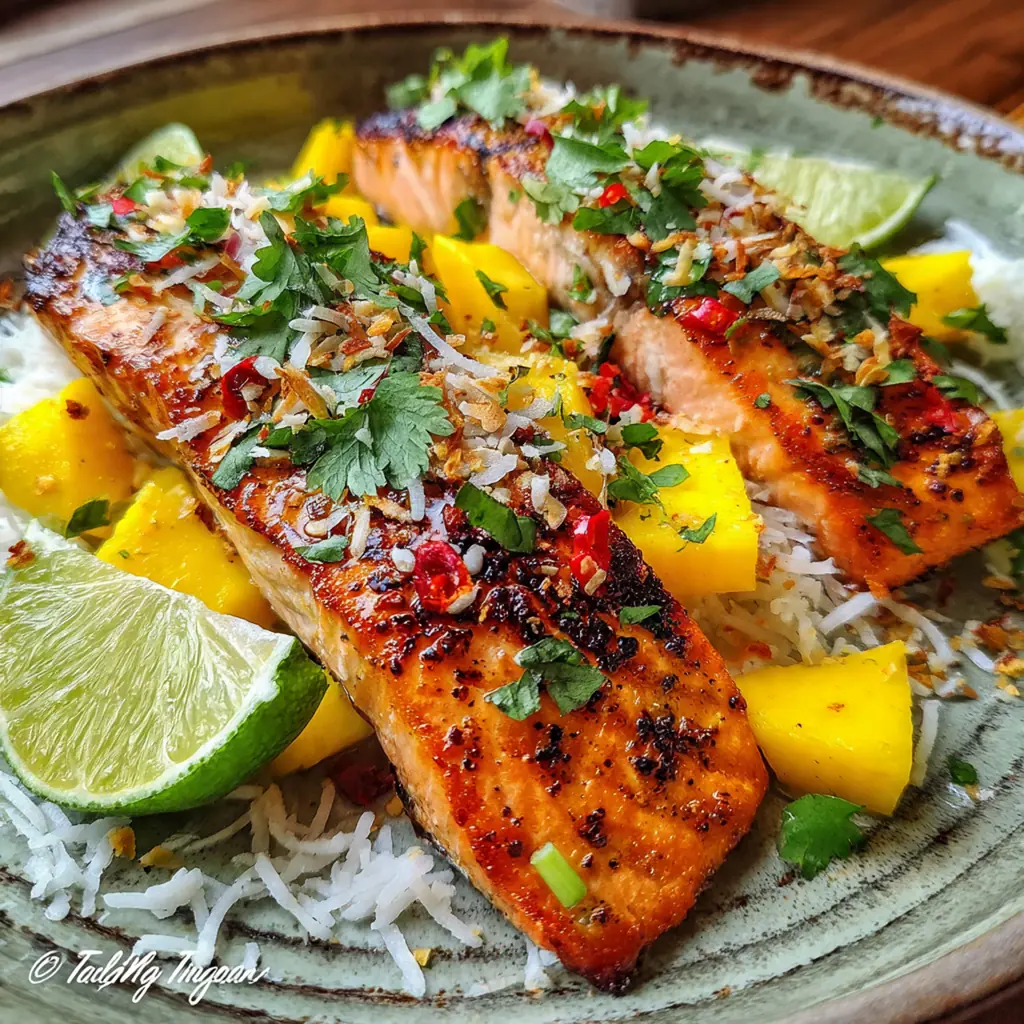
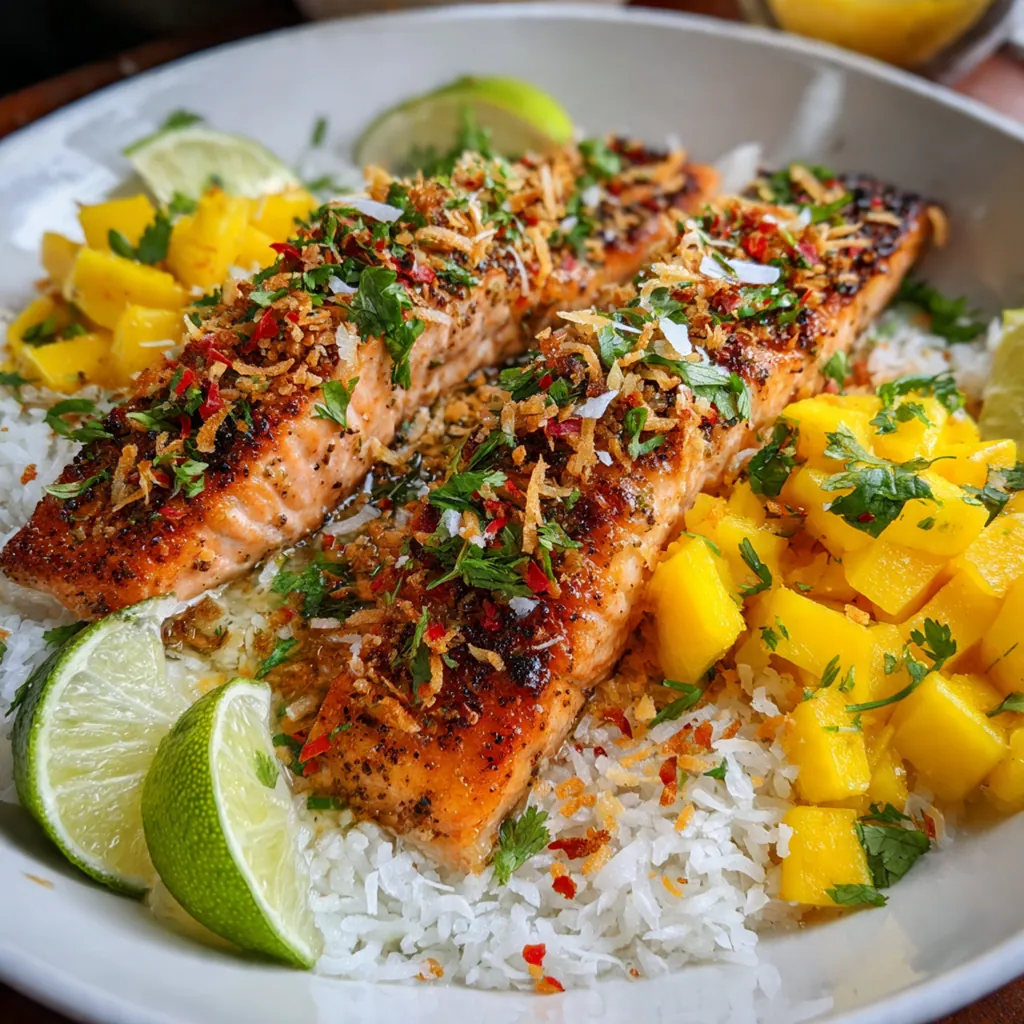
To serve, I place a grilled salmon fillet on each plate, top it with a generous scoop of mango salsa, and drizzle everything with the warm coconut milk. A sprinkle of toasted coconut flakes and extra cilantro leaves makes it look stunning, and I always serve with lime wedges for that final bright touch.
You Must Know
- Wild-caught salmon gives the best flavor and doesn’t overcook easily
- Toast your own coconut flakes for a nuttier, more aromatic garnish
- Control the salsa heat by keeping or discarding jalapeño seeds
- Let the salmon rest briefly after grilling to lock in juices
- Choose a mango that’s ripe but still firm for perfect salsa texture
Storage Tips
If you have leftovers, store the grilled salmon and mango salsa in separate airtight containers in the fridge—they’ll keep for up to two days for the salmon and one day for the salsa. To reheat the salmon, I pop it in a 300°F oven for about 10 minutes; this gentle heat helps it stay moist instead of drying out. The salsa is best enjoyed fresh, but if you must store it, give it a stir before serving as it might release some liquid. I don’t recommend freezing this dish because the textures don’t hold up well.
Ingredient Substitutions
If salmon isn’t available, arctic char or steelhead trout work beautifully with the same grilling time. For the mango, ripe peaches or pineapple can stand in for a similar sweet-tart vibe. If you’re out of fresh ginger, a teaspoon of ground ginger will do in the marinade, though fresh is best. Agave or maple syrup can replace honey for a vegan option, and if you’re not a cilantro fan, fresh mint or basil adds a different but lovely herbal note. For a lighter drizzle, light coconut milk works, but it won’t be as creamy.
Serving Suggestions
I love serving this grilled salmon mango coconut with steamed jasmine rice or fluffy quinoa to catch every drop of that creamy coconut sauce. For sides, grilled asparagus or zucchini adds a smoky contrast, or a simple mixed green salad with a lime vinaigrette keeps things light and fresh. If you’re feeding a crowd, a big bowl of coconut rice or a tropical fruit salad would complement the flavors perfectly. It’s a complete meal that feels special enough for guests but easy enough for any night.
Cultural Context
This grilled salmon mango coconut dish draws inspiration from Hawaiian cuisine, where the abundance of fresh seafood, tropical fruits, and coconut creates a vibrant culinary tradition. In Hawaii, you might find similar combinations in poke bowls or grilled fish plates, emphasizing the harmony between land and sea. The use of mango and coconut reflects the islands’ lush produce, while grilling is a common cooking method that adds a smoky depth. I’ve adapted these elements into a quick, home-cooked meal that captures that aloha spirit—it’s a celebration of sweet, savory, and creamy flavors that transport you to a beachside luau without leaving your kitchen.
Pro Tips
- Opt for wild-caught salmon for superior flavor and texture on the grill
- Toast coconut flakes in a dry pan until golden for maximum aroma
- Adjust salsa heat by leaving jalapeño seeds in or taking them out
- Let salmon rest for five minutes after grilling to retain juiciness
- Pick a mango that yields slightly but isn’t soft for ideal salsa
Frequently Asked Questions
For the best sweet mango salsa, choose a mango that gives slightly to gentle pressure near the stem, similar to a ripe avocado. Its skin should be fragrant and brightly colored with shades of red, orange, and yellow.
You can, but full-fat coconut milk creates a richer, creamier drizzle that balances the salsa’s acidity perfectly. Light coconut milk will be thinner and less decadent, so the dish won’t have the same lush mouthfeel.
For the marinade, 1 teaspoon of ground ginger can work in a pinch, but it won’t have the same bright, zesty kick. Fresh ginger is highly recommended for the best flavor. Use a microplane to grate it easily.
The salmon is perfectly cooked when it flakes easily with a fork and has an internal temperature of 145°F. For skin-on fillets, you can also check that the skin is crispy and the flesh is opaque all the way through.
To complement the Hawaiian-inspired flavors, serve with coconut rice, a simple green salad, or grilled vegetables like asparagus or zucchini. A light, citrusy white wine or iced tea would pair beautifully.