

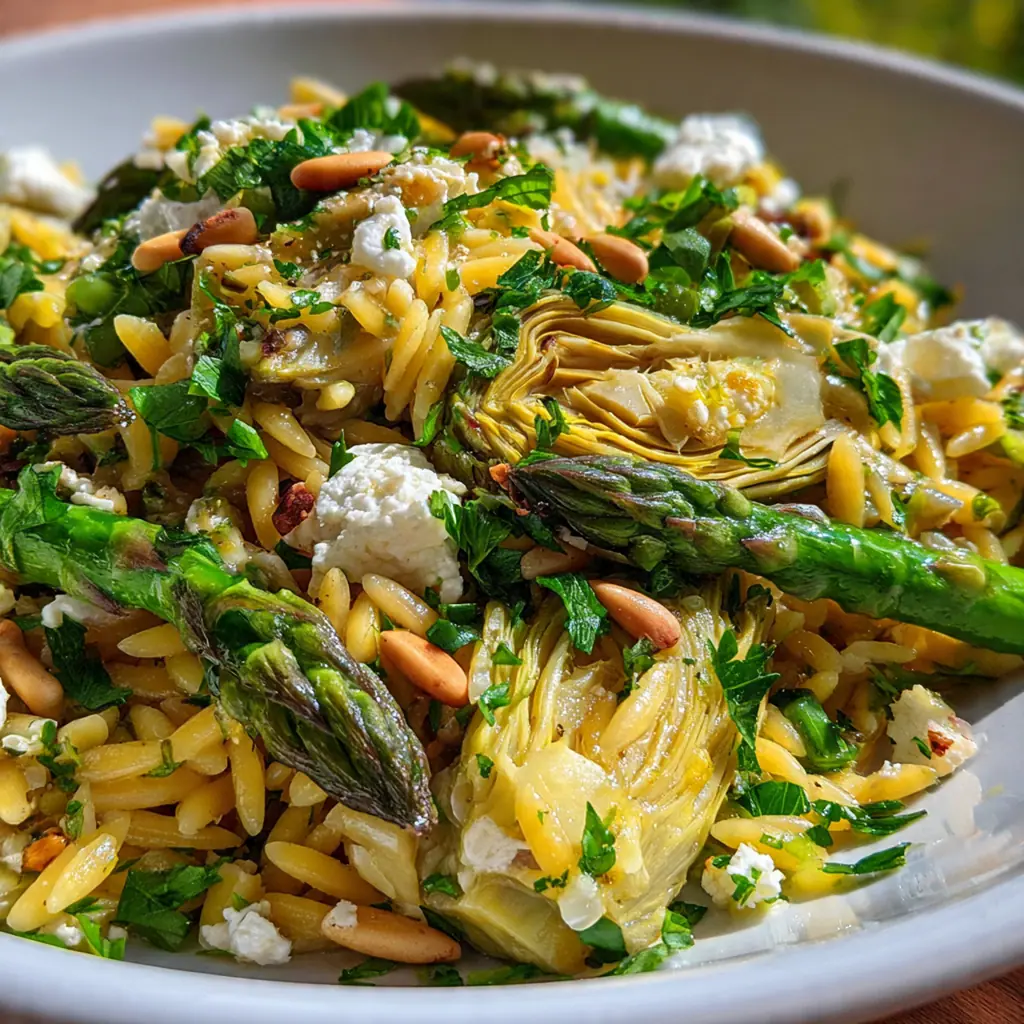
This Orzo Asparagus Artichokes Feta salad is the vibrant Mediterranean side dish that saves every spring gathering for me. It combines tender pasta, crisp green spears, and salty cheese into one bowl of pure sunshine. I fell in love with these flavors during a trip to the Greek islands where simple ingredients always shine. Making it at home brings that same fresh, bright energy to your table without any fuss. It’s become my absolute go-to for easy weeknight dinners or feeding a crowd.
Why You'll Love This Recipe
- Crisp asparagus and bright lemon keep every bite refreshing and light
- Hearty orzo and feta make it substantial enough for a main course
- It actually tastes better after chilling for a bit in the fridge
- Perfect for picnics because it doesn’t get soggy
- I make this constantly during spring and summer
Ingredients You’ll Need
- Orzo pasta: this rice-shaped pasta is the perfect base that catches all the dressing in its little curves
- Asparagus: look for firm bright green stalks with tight tips for the best snap and flavor
- Canned artichoke hearts: choose ones packed in water or brine, not oil, for a cleaner taste
- Block feta cheese: buying it in brine keeps it moist and creamy, much better than pre-crumbled
- Extra-virgin olive oil: the foundation of the dressing, use a fruity oil you’d dip bread into
- Fresh lemon juice: always squeeze it fresh; bottled juice can’t match that zesty brightness
- Garlic cloves: a couple of fresh cloves provide the aromatic kick that ties everything together
- Kosher salt: coarse salt seasons the orzo water and balances the tangy dressing
- Black pepper: fresh cracked pepper adds a gentle heat that lingers in the background
- Fresh basil leaves: this sweet herb adds a peppery, aromatic freshness that is essential
- Fresh dill: its unique grassy flavor is what makes the salad taste authentically Mediterranean
- Toasted pine nuts: toasting brings out a buttery richness that contrasts the bright veggies
- Sun-dried tomatoes: an optional punch of concentrated sweetness and chewy texture
- Red pepper flakes: add these if you want a subtle heat that builds with every bite
- Lemon zest: the oils in the peel add an intense citrus aroma without extra liquid
How to Make It
Boil the Orzo:
Start by bringing a large pot of generously salted water to a rolling boil. Add the orzo and cook it according to the package directions until it is just tender, usually about 8 to 10 minutes. Salting the water now is your only chance to season the pasta itself from the inside out.:
Blanch the Asparagus:
While the orzo cooks, prepare a large bowl of ice water on the side. Trim the tough woody ends off your asparagus and cut the stalks into one-inch pieces. In the final two minutes of the orzo’s cooking time, toss the asparagus pieces directly into the boiling pasta water to blanch them quickly.:
Shock and Drain:
Drain the orzo and asparagus together in a colander, then immediately plunge them into the waiting ice water bath. Let them sit for about 30 seconds to stop the cooking process instantly; this keeps the asparagus brilliantly green and crisp-tender. Drain everything very well so excess water doesn’t dilute your dressing.:
Make the Dressing:
In a large mixing bowl, whisk together the extra-virgin olive oil, fresh lemon juice, minced garlic, kosher salt, and black pepper. Whisk vigorously until the mixture looks creamy and emulsified rather than separated and oily. This vinaigrette is the zesty backbone of the entire dish.:
Combine and Coat:
Add your drained orzo and asparagus to the bowl with the dressing. Toss everything gently but thoroughly so that every single piece of pasta and vegetable gets coated in that lemony garlic oil. The warmth of the pasta will help it absorb all those delicious flavors.:
Fold in the Mix-Ins:
Gently fold in the quartered artichoke hearts, crumbled feta, chopped fresh basil, fresh dill, and the toasted pine nuts. If you decided to use the optional sun-dried tomatoes or a pinch of red pepper flakes, add them now too. Be careful not to stir too aggressively or the feta will break down completely.:
Taste and Adjust:
Take a moment to taste your salad. Does it need more salt? Maybe another squeeze of lemon for brightness? You are the boss of this flavor profile, so adjust it until it makes you smile. Remember the feta adds salt, so season lightly at first.:
Serve and Rest:
You can serve this salad immediately while it is still slightly warm, which is my personal favorite time. Alternatively, pop it in the fridge for 30 minutes to let the flavors meld together into something truly special. Just before serving, give it a final toss and garnish with extra feta, fresh lemon zest, and herbs.:
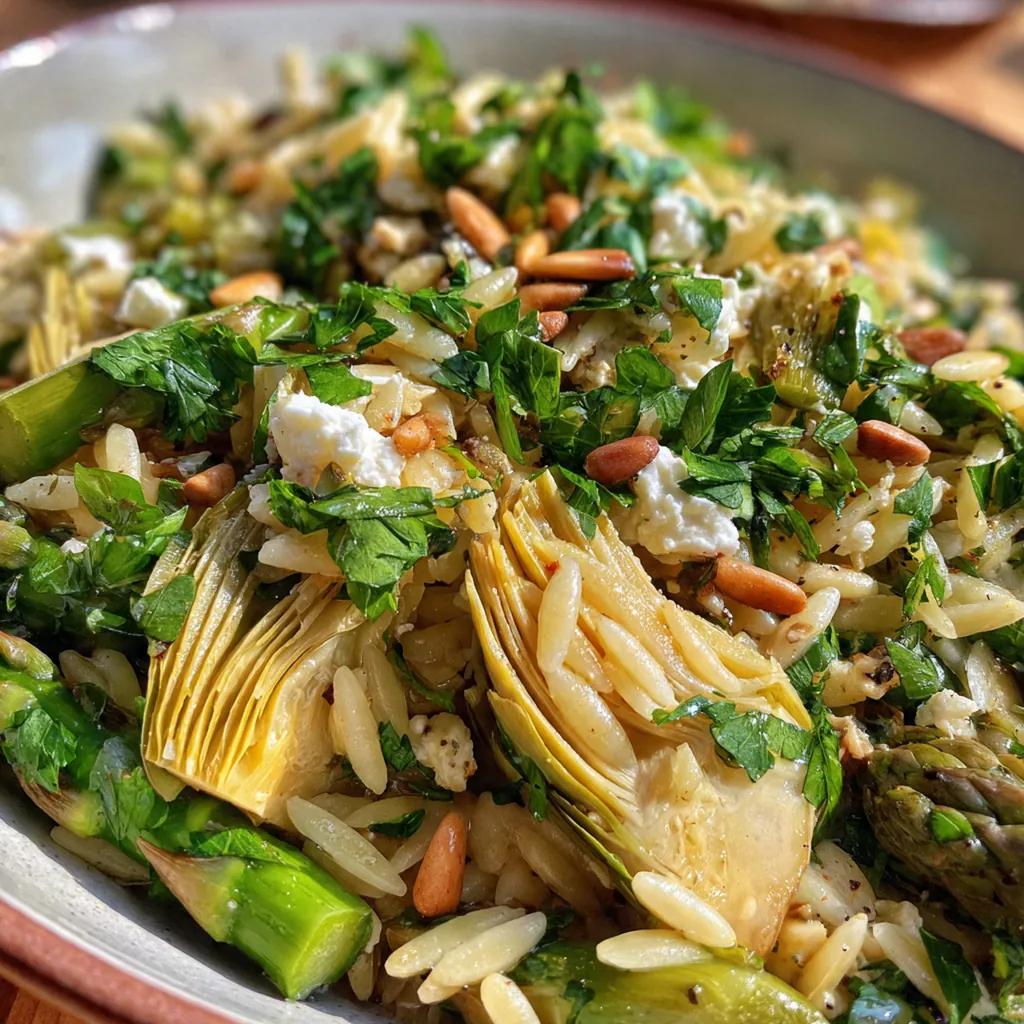
You Must Know
- The ice bath is non-negotiable for crisp green asparagus
- Use block feta in brine for the best texture
- Toasting pine nuts takes 3 minutes and adds huge flavor
- Letting it rest makes the flavors marry beautifully
- Save a splash of pasta water to loosen the dressing
Storage Tips
Store any leftovers in an airtight container in the refrigerator for up to three days. The pasta will soak up the dressing as it sits, so I recommend adding a fresh drizzle of olive oil and a squeeze of lemon juice before eating the leftovers. This salad is honestly best served at room temperature rather than straight out of the cold fridge, so let it sit out for 15 minutes before you dig in again.
Ingredient Substitutions
If you can’t find pine nuts or have a nut allergy, toasted sunflower seeds or even chopped toasted walnuts provide a similar crunch and richness. For a gluten-free version, simply swap the regular orzo for a gluten-free pasta variety and cook it the same way. If you aren’t a fan of feta, crumbled goat cheese offers a similar tangy creaminess, or you can omit the cheese entirely for a vegan option. Fresh herbs are best, but if you must use dried, use about one-third of the amount called for.
Serving Suggestions
This salad is incredibly versatile and stands up well next to grilled chicken, lamb chops, or a piece of seared salmon for a complete meal. I love serving it alongside warm pita bread and a bowl of hummus to lean into the Mediterranean theme. It is the absolute perfect side dish for a picnic or potluck since it doesn’t wilt easily and feeds a crowd without any mayonnaise worries.
Cultural Context
This dish is a beautiful example of modern Mediterranean home cooking, borrowing heavily from Greek and Italian traditions where pasta salads are a warm-weather staple. In Greece, you might find similar combinations of orzo, lemon, and fresh herbs served warm as a side to grilled meats, while Italians love tossing cooked pasta with seasonal vegetables right from the garden. It celebrates the philosophy of using simple, fresh ingredients to create something greater than the sum of their parts, letting the vegetables and olive oil truly shine.
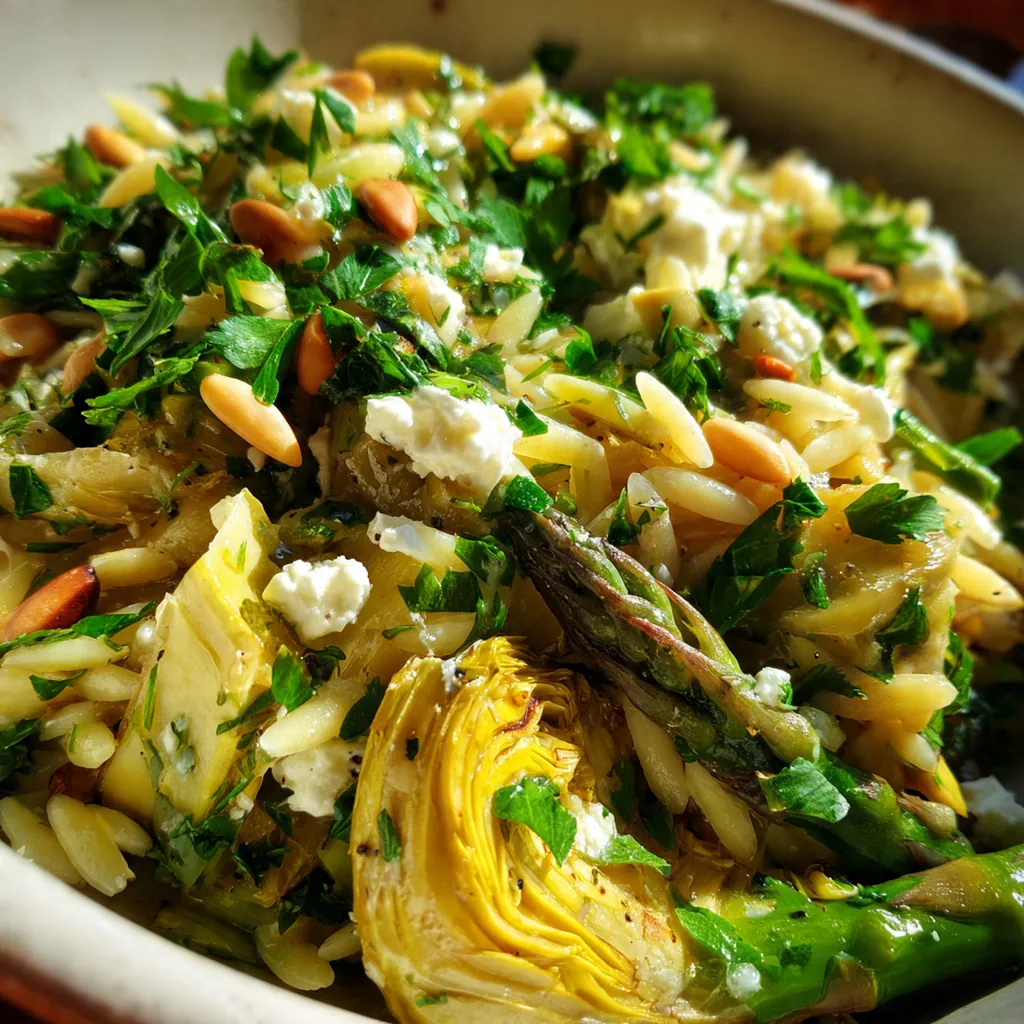
Pro Tips
- Spread your pine nuts in a dry skillet over medium heat and shake them until golden, watchin…
- If your dressing tastes too sharp, whisk in a teaspoon of honey or maple syrup to balance th…
- A microplane is the best tool for getting fine lemon zest without the bitter white pith unde…
- This salad is forgiving, so don’t stress if it sits out during a party; it holds up beautifu…
- I sometimes use my preserved lemon brine in place of some salt for an incredible depth of fl…
Frequently Asked Questions
The flavor comes from the bright lemon dressing, fresh herbs like basil and dill, and the combination of salty feta with earthy artichokes. The extra-virgin olive oil carries all these flavors while the garlic adds depth. Toasting the pine nuts brings out their natural sweetness and adds a crucial textural contrast to the tender orzo and vegetables.
Yes! You can prep this salad up to 24 hours in advance. Cook the orzo and blanch the asparagus, then toss with the dressing and refrigerate. Wait to add the fresh herbs, feta, and pine nuts until just before serving to maintain their texture and flavor. If serving cold, you may need to add a splash more olive oil or lemon juice to refresh the pasta.
If you don’t have artichoke hearts, try roasted red peppers, sun-dried tomatoes, or fresh cherry tomatoes for a similar Mediterranean vibe. You could also use capers for a briny kick or chopped olives for that salty punch. Each substitute will change the flavor profile slightly while keeping the salad’s fresh, bright character intact.
Cook the orzo until it’s al dente—tender but still with a slight bite in the center, usually about 8-10 minutes. The asparagus should be bright green and crisp-tender after 2-3 minutes of blanching. The salad is ready when everything is coated in the dressing and the flavors have melded, which happens quickly since it’s served at room temperature.
This Mediterranean salad pairs beautifully with grilled chicken, fish, or lamb for a complete meal. It’s also fantastic alongside other Greek-inspired dishes like hummus, tzatziki, or roasted vegetables. For a lighter spring dinner, serve it with a simple green salad and crusty bread to soak up the delicious lemon-olive oil dressing.