

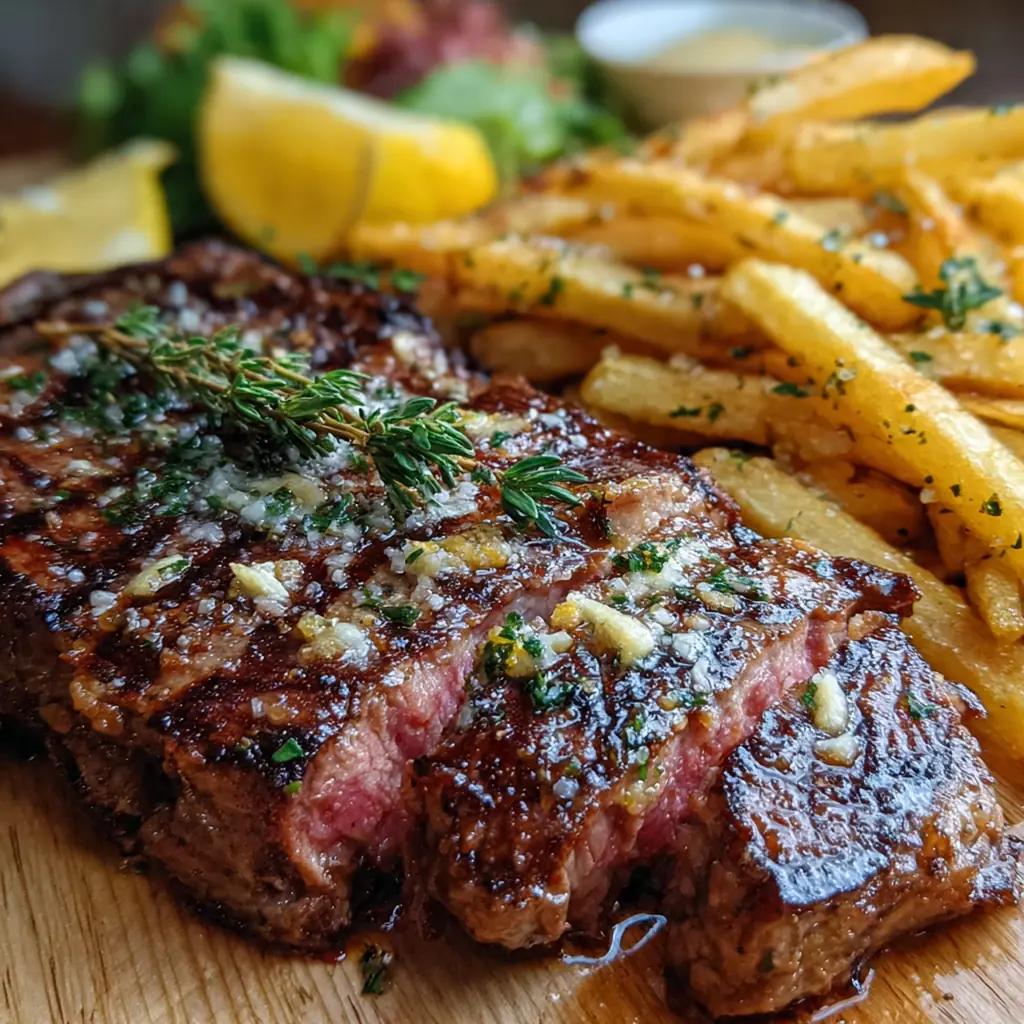
This Classic Steak Frites recipe captures the soul of a Parisian bistro right in your own kitchen. There is something undeniably romantic about the sizzle of a steak hitting a hot pan alongside the aroma of fresh frying potatoes. I have always believed that the best meals don’t require complexity, just quality ingredients and a few French techniques. Mastering this dish means you have the power to create a restaurant-quality date night without ever leaving your home.
Why You'll Love This Recipe
- The double-fry method guarantees fries that stay crunchy longer than you can resist
- You get a rich, glossy pan sauce that feels incredibly fancy but takes minutes
- It transforms simple pantry staples into a meal that looks like you tried way harder
- Resting the steak ensures every single bite is tender and juicy
- I make this on Fridays to unwind from the week, and it never fails to impress.
Ingredients You’ll Need
- Russet potatoes: The high starch content creates that perfect fluffy interior and crispy exterior. Choose potatoes that are firm with no green spots for the best texture.
- Vegetable oil: A neutral oil with a high smoke point is essential for frying. It lets the flavor of the potatoes and steak shine without burning.
- Kosher salt: Coarse salt adheres better to the steak and fries. It draws out moisture for better browning and seasons the dish evenly.
- Black pepper: Freshly ground pepper offers a pungent heat that pre-ground versions lack. It adds a necessary kick to the savory steak.
- Ribeye or sirloin steaks: Ribeye brings rich marbling and buttery flavor, while sirloin offers a leaner, beefier bite. Choose a thick cut for a great sear.
- Unsalted butter: Creamy and rich, butter forms the base of the flavorful pan sauce. Using unsalted lets you control the saltiness perfectly.
- Garlic cloves: Smashed cloves release a mellow, nutty aroma when basted. They infuse the butter and meat with deep savory notes.
- Fresh thyme: Woody and earthy, fresh thyme holds up to high heat. It pairs beautifully with beef and red wine.
- Beef broth: This adds a savory depth and body to the sauce. A good quality broth makes the reduction taste rich and meaty.
- Dry red wine: The acidity cuts through the richness of the butter and beef. A Cabernet or Merlot deglazes the pan and lifts the flavors.
- Dijon mustard: This emulsifier adds a sharp tang and helps thicken the sauce. It brings a complex depth that balances the butter.
- Cold butter: Whisking in cold butter at the end creates a silky, glossy texture. It stops the cooking and emulsifies the sauce beautifully.
- Fresh parsley: A burst of green freshness brightens the heavy sauce. It adds a clean, peppery finish to the dish.
- Shallots: As an optional addition, finely minced shallots add a sweet, aromatic base to the sauce. They complement the red wine perfectly.
- Flaky sea salt: A finishing sprinkle adds a satisfying crunch and pop of salinity. It elevates the steak from good to great.
How to Make It
Prep The Potatoes:
Start by peeling your Russet potatoes and cutting them into uniform 1/4-inch thick batons. Place them immediately in a large bowl of cold water and let them soak for at least 15 minutes. This step is crucial as it removes excess starch, which prevents the fries from sticking together and ensures they get really crispy.
Dry And Heat Oil:
Drain the potatoes thoroughly and pat them completely dry with paper towels. Any moisture left on the surface can cause the oil to splatter and the fries to steam instead of fry. Heat 2 tablespoons of vegetable oil in a large heavy-bottomed pot until it reaches exactly 325°F (165°C) using a thermometer.
First Fry (Par-Cooking):
Fry the potatoes in batches to avoid overcrowding the pot. Cook them for about 4 to 5 minutes, stirring occasionally, until they are soft and pale golden but not browned. Use a slotted spoon to transfer them to a paper towel-lined baking sheet and let them cool for at least 10 minutes.
Heat Oil And Prep Steaks:
While the fries cool, increase the oil temperature to 375°F (190°C). Remove your steaks from the refrigerator about 20 minutes before cooking to take the chill off. Pat the steaks very dry with paper towels and season them generously on all sides with kosher salt and black pepper.
Second Fry (Crisping):
Carefully return the par-cooked fries to the hot oil in batches. Fry them for another 2 to 3 minutes until they are deeply golden brown and very crispy. Remove them with a slotted spoon, drain on fresh paper towels, and season immediately with a pinch of salt. Keep them warm in a low oven if needed while you cook the steak.
Sear The Steaks:
While the fries finish, heat the remaining 2 tablespoons of oil in a large cast-iron skillet over high heat until it shimmers. Carefully place the steaks in the pan and sear them undisturbed for 3 to 4 minutes per side for a perfect medium-rare internal temperature of 130°F.
Baste With Aromatics:
Reduce the heat to medium and add the unsalted butter, smashed garlic cloves, and fresh thyme sprigs to the pan. Tilt the pan slightly and use a large spoon to continuously baste the steaks with the foaming butter for about 1 minute. This infuses the meat with incredible flavor. Remove the steaks to a cutting board to rest for 10 minutes.
Make The Red Wine Pan Sauce:
Remove the thyme and garlic from the skillet to prevent bitterness. Increase the heat to medium-high and pour in the red wine to deglaze. Use a wooden spoon to scrape up all the flavorful browned bits stuck to the bottom of the pan. Let the wine bubble and reduce by half, which should take about 2 minutes.
Finish The Sauce:
Add the beef broth and Dijon mustard to the reduced wine. Simmer the mixture until the sauce thickens slightly, about 3 to 4 minutes. Remove the pan from the heat and whisk in the cold cubed butter until the sauce is smooth and glossy. Stir in the chopped parsley and season with salt and pepper to your taste.
Serve And Enjoy:
Slice the rested steak against the grain to ensure tenderness. Serve it immediately piled high with the hot crispy fries and drizzle generously with the red wine reduction sauce. I love watching that glossy sauce pool around the meat and potatoes.
Prep The Potatoes:
Start by peeling your Russet potatoes and cutting them into uniform 1/4-inch thick batons. Place them immediately in a large bowl of cold water and let them soak for at least 15 minutes. This step is crucial as it removes excess starch, which prevents the fries from sticking together and ensures they get really crispy.
Dry And Heat Oil:
Drain the potatoes thoroughly and pat them completely dry with paper towels. Any moisture left on the surface can cause the oil to splatter and the fries to steam instead of fry. Heat 2 tablespoons of vegetable oil in a large heavy-bottomed pot until it reaches exactly 325°F (165°C) using a thermometer.
First Fry (Par-Cooking):
Fry the potatoes in batches to avoid overcrowding the pot. Cook them for about 4 to 5 minutes, stirring occasionally, until they are soft and pale golden but not browned. Use a slotted spoon to transfer them to a paper towel-lined baking sheet and let them cool for at least 10 minutes.
Heat Oil And Prep Steaks:
While the fries cool, increase the oil temperature to 375°F (190°C). Remove your steaks from the refrigerator about 20 minutes before cooking to take the chill off. Pat the steaks very dry with paper towels and season them generously on all sides with kosher salt and black pepper.
Second Fry (Crisping):
Carefully return the par-cooked fries to the hot oil in batches. Fry them for another 2 to 3 minutes until they are deeply golden brown and very crispy. Remove them with a slotted spoon, drain on fresh paper towels, and season immediately with a pinch of salt. Keep them warm in a low oven if needed while you cook the steak.
Sear The Steaks:
While the fries finish, heat the remaining 2 tablespoons of oil in a large cast-iron skillet over high heat until it shimmers. Carefully place the steaks in the pan and sear them undisturbed for 3 to 4 minutes per side for a perfect medium-rare internal temperature of 130°F.
Baste With Aromatics:
Reduce the heat to medium and add the unsalted butter, smashed garlic cloves, and fresh thyme sprigs to the pan. Tilt the pan slightly and use a large spoon to continuously baste the steaks with the foaming butter for about 1 minute. This infuses the meat with incredible flavor. Remove the steaks to a cutting board to rest for 10 minutes.
Make The Red Wine Pan Sauce:
Remove the thyme and garlic from the skillet to prevent bitterness. Increase the heat to medium-high and pour in the red wine to deglaze. Use a wooden spoon to scrape up all the flavorful browned bits stuck to the bottom of the pan. Let the wine bubble and reduce by half, which should take about 2 minutes.
Finish The Sauce:
Add the beef broth and Dijon mustard to the reduced wine. Simmer the mixture until the sauce thickens slightly, about 3 to 4 minutes. Remove the pan from the heat and whisk in the cold cubed butter until the sauce is smooth and glossy. Stir in the chopped parsley and season with salt and pepper to your taste.
Serve And Enjoy:
Slice the rested steak against the grain to ensure tenderness. Serve it immediately piled high with the hot crispy fries and drizzle generously with the red wine reduction sauce. I love watching that glossy sauce pool around the meat and potatoes.
You Must Know
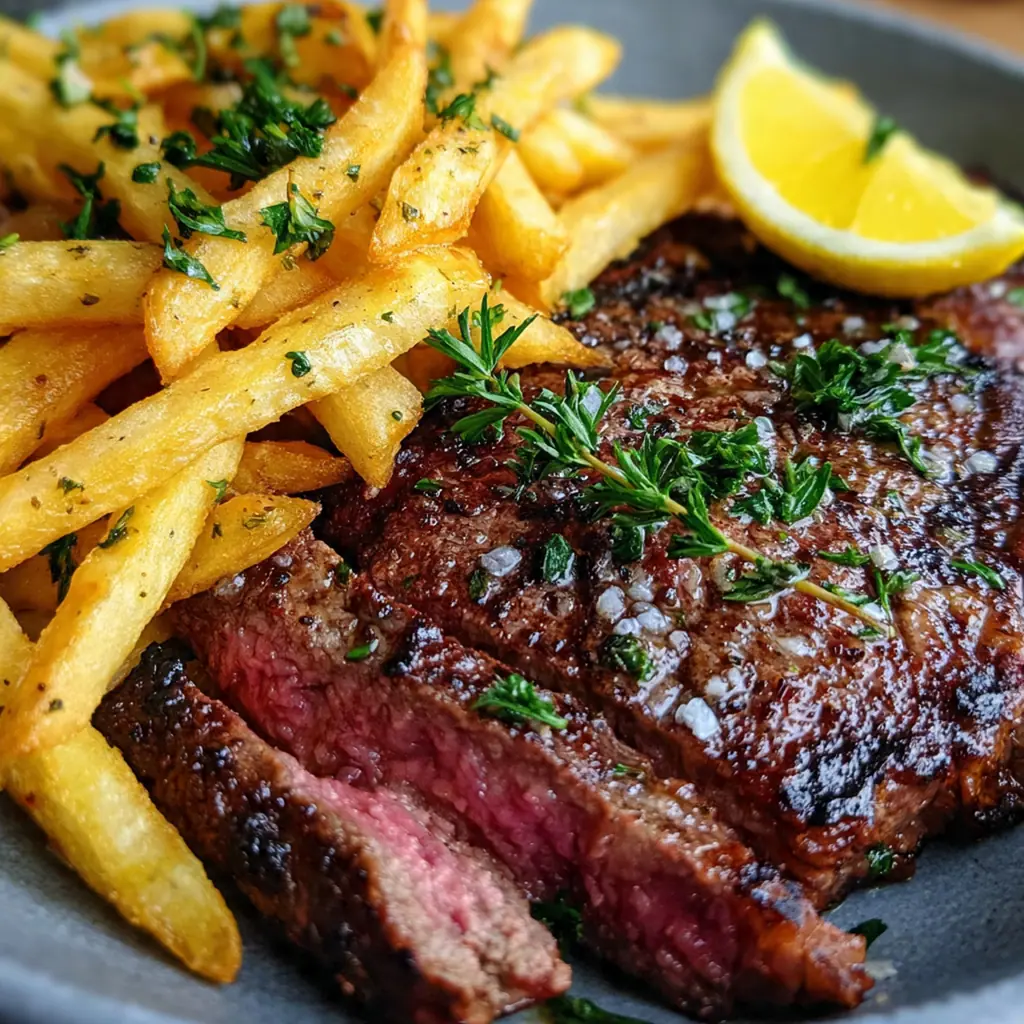
- The double-fry method is non-negotiable for perfect frites
- Pat your steak bone-dry to guarantee that beautiful brown crust
- Don’t skip the soaking step; it prevents burning and promotes fluffiness
- I never rush the resting time for the steak; it makes all the difference in texture.
Storage Tips
Steak is best enjoyed immediately after cooking while it is hot and juicy, but if you have leftovers, store them in an airtight container in the refrigerator. Leftover fries can be reheated in an air fryer or a hot oven to regain some of their crispiness, though they are never quite as good as fresh. The red wine sauce can be stored separately in the fridge for up to three days and gently reheated on the stove or in the microwave.
Ingredient Substitutions
If you cannot find Russet potatoes, Yukon Golds are a decent alternative, though they have a slightly waxier texture that holds its shape well. For the steaks, a New York strip is a fantastic substitute if you prefer something leaner than ribeye but still tender. If you are out of dry red wine, you can use an equal amount of additional beef broth plus a splash of red wine vinegar or balsamic to mimic the acidity. For a dairy-free version, swap the butter for a high-quality vegan butter or extra olive oil, keeping in mind the sauce will be slightly less rich and glossy.
Serving Suggestions
Serve your steak frites with a simple green salad tossed in a sharp vinaigrette to cut through the richness of the meat and fries. I love pairing this with a glass of the same red wine you used in the sauce for a cohesive flavor experience. For a true bistro feel, set out small bowls of cornichons and grainy mustard on the table. A pile of sautéed spinach or garlicky mushrooms makes a wonderful, easy side dish.
Cultural Context
Steak frites is a quintessential French dish, a national treasure that pairs a perfectly cooked steak with golden fried potatoes, and it is arguably the most popular bistro meal in Paris and Brussels. The dish reflects the French mastery of technique, where the simplicity of the ingredients is elevated by precise cooking methods like the double-fry for the potatoes and pan-sauce preparation. While variations exist across Europe and the United States, the classic combination of beef and potatoes remains a timeless comfort food that symbolizes casual yet sophisticated dining.
Pro Tips
- Use a neutral oil with a high smoke point for frying like canola or peanut
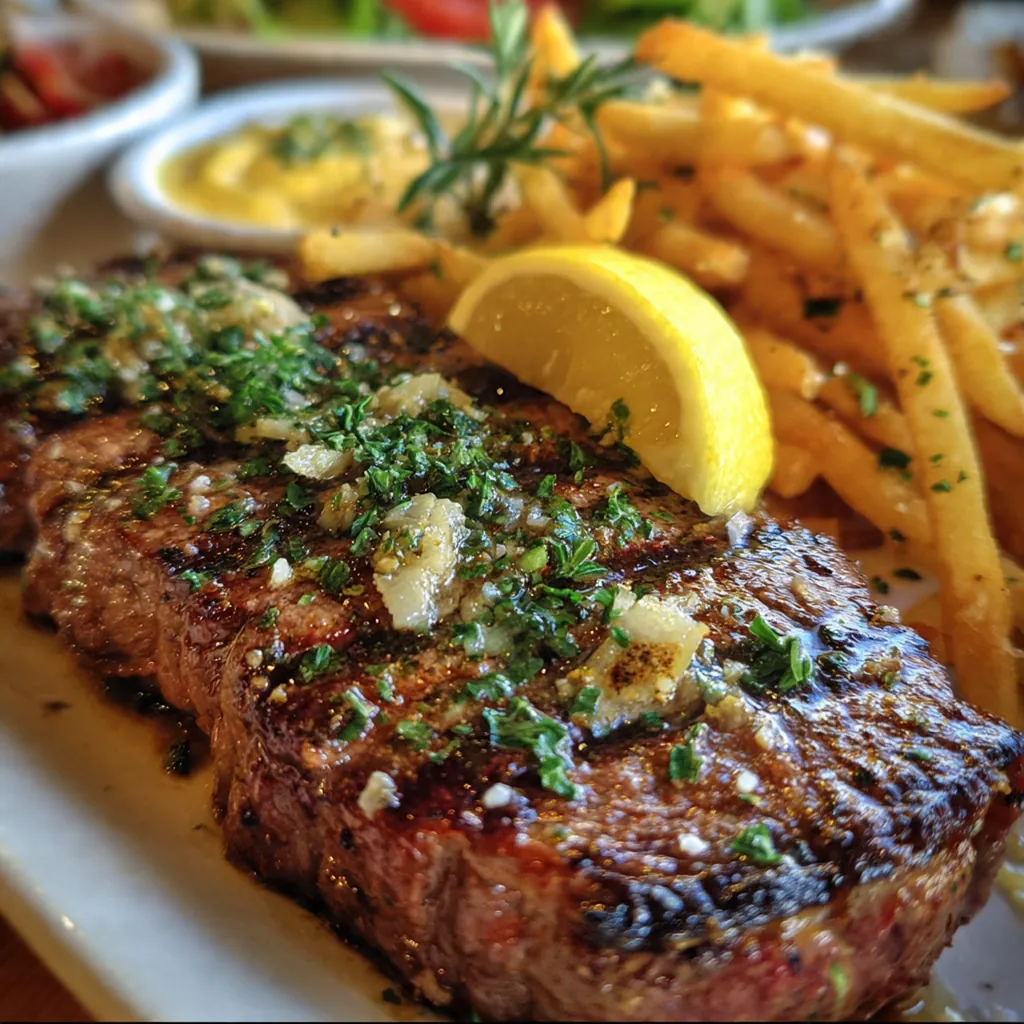
- Let the steak rest for at least 10 minutes so the juices redistribute back into the meat
- Pour the red wine carefully to avoid any splatters when deglazing the hot pan
- I always keep a close eye on the oil temperature, as even 10 degrees can change the texture …
Frequently Asked Questions
For the best steak frites, choose boneless ribeye or sirloin steaks that are 1 to 1.5 inches thick. Ribeye offers more marbling and flavor, while sirloin is leaner but still tender. Both cuts sear beautifully and pair perfectly with crispy fries.
Use russet potatoes for their high starch content. The double-fry method is key: fry once at 325°F to cook through, then again at 375°F until golden and crispy. This creates that perfect French bistro texture that holds up alongside the steak.
For the red wine reduction, you can substitute beef broth mixed with a splash of balsamic vinegar for acidity. While dry red wine like Cabernet Sauvignon provides the best flavor, a non-alcoholic red wine or additional beef broth with extra Dijon mustard works well too.
Use a meat thermometer for accuracy: 125°F for rare, 135°F for medium-rare, 145°F for medium. Let the steak rest for 5 minutes after cooking for juicier results. The garlic and thyme should be fragrant and the butter foamy when basting.
Classic French steak frites is often served simply with a green salad dressed in vinaigrette or creamed spinach. For a full bistro experience, add a glass of the same red wine used in the sauce or a crisp French lager.