

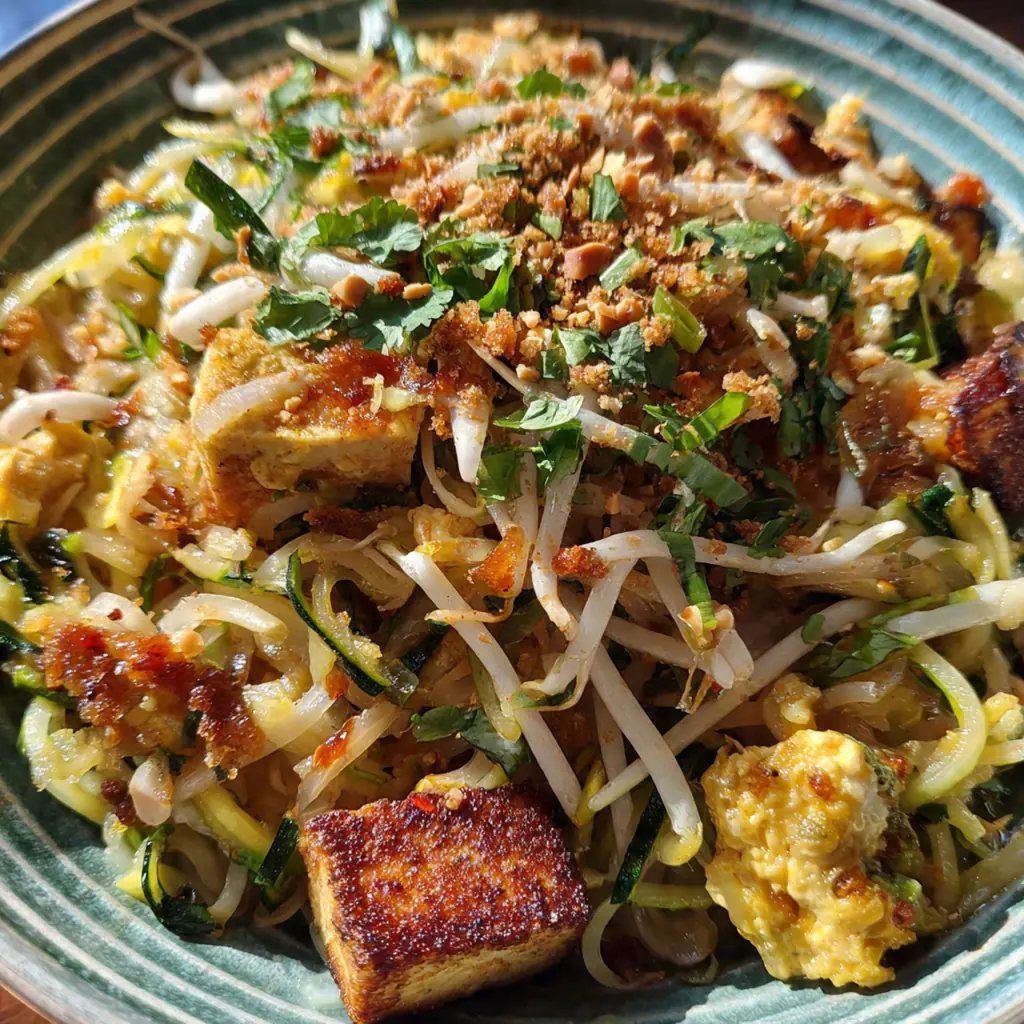
Zucchini Pad Thai brings the vibrant flavors of Thai street food right into your healthy kitchen. This low-carb twist uses spiralized zucchini instead of traditional rice noodles for a lighter, vegetable-forward meal. It perfectly captures that authentic balance of sweet, sour, salty, and spicy elements that made the original dish a global favorite. As someone who craves Thai takeout but wants to keep things fresh and light, this recipe has become my go-to solution.
Why You'll Love This Recipe
- Ready in just 35 minutes total, it’s faster than waiting for delivery
- Uses spiralized zucchini noodles for a satisfying, low-carb base
- Packed with authentic sweet-sour-salty Thai flavors that hit every craving
- Perfect balance of vegetables, protein, and texture in every bite
- I keep this in my rotation for busy weeknights when I want takeout flavor without the guilt
- It’s my favorite way to sneak extra veggies into dinner without anyone complaining.
Ingredients You’ll Need
- Zucchini noodles: The star of the show, they provide that authentic pad thai texture without all the carbs and keep the dish light and fresh
- Sesame oil: Adds that deep, nutty foundation flavor that makes the dish taste like real Thai cuisine
- Garlic and shallot: Create the aromatic base that infuses every bite with savory depth
- Red bell pepper: Brings sweet crunch and vibrant color that makes the dish visually appealing
- Bean sprouts: Offer fresh crispness and that classic pad thai street food element
- Green onions: Provide sharp, fresh bite and color contrast to the cooked vegetables
- Eggs: Add protein richness and mimic the traditional egg component of classic pad thai
- Roasted peanuts: Give essential crunch and that signature nutty flavor profile
- Fresh cilantro: Brightens everything with its distinctive herbal pop
- Lime juice: Delivers the essential acidity that cuts through richness and balances the sauce
- Tamari or soy sauce: Forms the salty umami backbone of the entire dish
- Rice vinegar: Adds clean, tangy brightness that enhances the overall flavor
- Coconut sugar: Provides natural sweetness to balance the vinegar and lime without being cloying
- Sriracha: Brings that necessary heat and depth that makes Thai food so addictive
- Fish sauce: The secret ingredient for authentic Thai funkiness and umami complexity
- Toasted sesame oil: The finishing touch that ties everything together with aromatic nuttiness
- Extra lime wedges: For those final bursts of acidity right before eating
- Red pepper flakes: For heat lovers who want an extra kick
- Extra chopped peanuts: For maximum crunch and visual appeal
How to Make It
Prepare the Zucchini Noodles:
Spiralize your zucchini using a medium noodle setting and place them in a colander. Sprinkle with a teaspoon of salt and let them drain in the sink for ten minutes. This crucial step removes excess water that would otherwise make your dish soggy, so don’t skip it even if you’re in a rush.
Pat Dry and Set Aside:
After ten minutes, gently press the zucchini noodles with paper towels to remove remaining moisture. You’ll be surprised how much liquid comes out. Set the drained, dried noodles aside while you make the sauce. This prepping ahead keeps everything organized when you start cooking.
Make the Peanut Lime Sauce:
In a small bowl, whisk together the tamari, rice vinegar, coconut sugar, fish sauce, sriracha, lime juice, and toasted sesame oil. Keep whisking until the sugar fully dissolves and the mixture looks smooth. Set this flavorful sauce aside because you’ll need it ready to pour over the hot noodles.
Heat the Pan and Aromatics:
Heat a large skillet or wok over medium-high heat and add one tablespoon of sesame oil. Toss in the minced garlic and finely chopped shallot, sautéing for just thirty seconds until they smell amazing. You want them fragrant but not browned at all.
Stir-Fry the Vegetables:
Add the sliced red bell pepper and the white parts of your green onions to the pan. Stir-fry for two to three minutes until the peppers soften slightly but still keep their crunch. I like to keep things moving constantly with tongs so nothing sticks or burns.
Scramble the Eggs:
Push all the vegetables to one side of the skillet. Add the remaining tablespoon of oil to the empty side and pour in your beaten eggs. Scramble them for one to two minutes until they’re just cooked through, then mix everything together. The eggs should be soft, not rubbery.
Combine with Zucchini Noodles:
Add your drained zucchini noodles to the skillet. Toss everything together gently with tongs for about one minute just to heat the noodles through. Be very careful not to overcook here, or the zucchini will release more water and become mushy.
Add the Sauce and Toss:
Pour your prepared peanut lime sauce over the zucchini noodles. Toss continuously for two to three minutes until the noodles are evenly coated and slightly warmed but still have a nice bite. The sauce will thicken slightly and cling to everything beautifully.
Finish with Fresh Toppings:
Turn off the heat completely. Add half the bean sprouts, the green parts of the green onions, and half the chopped peanuts. Toss gently with the residual heat. This keeps the fresh elements crisp and vibrant rather than wilting them.
Plate and Serve:
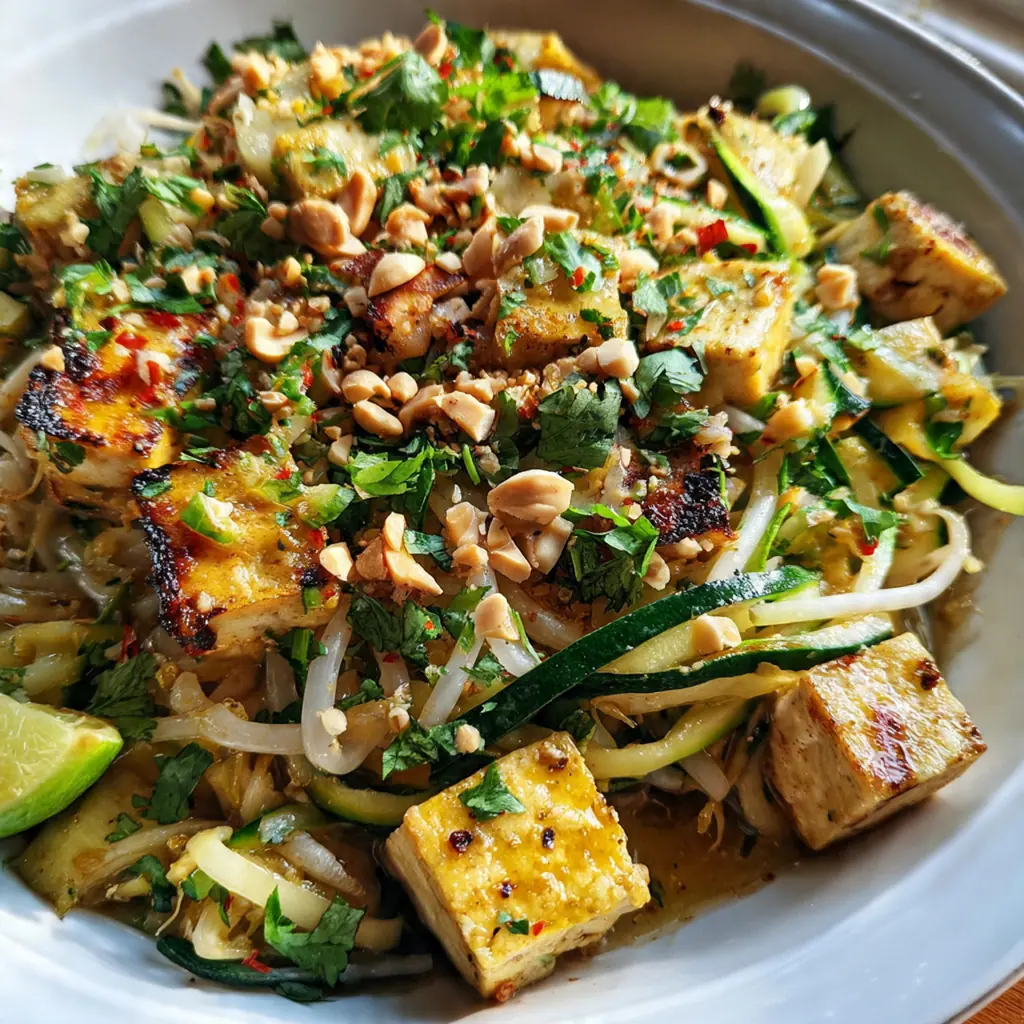
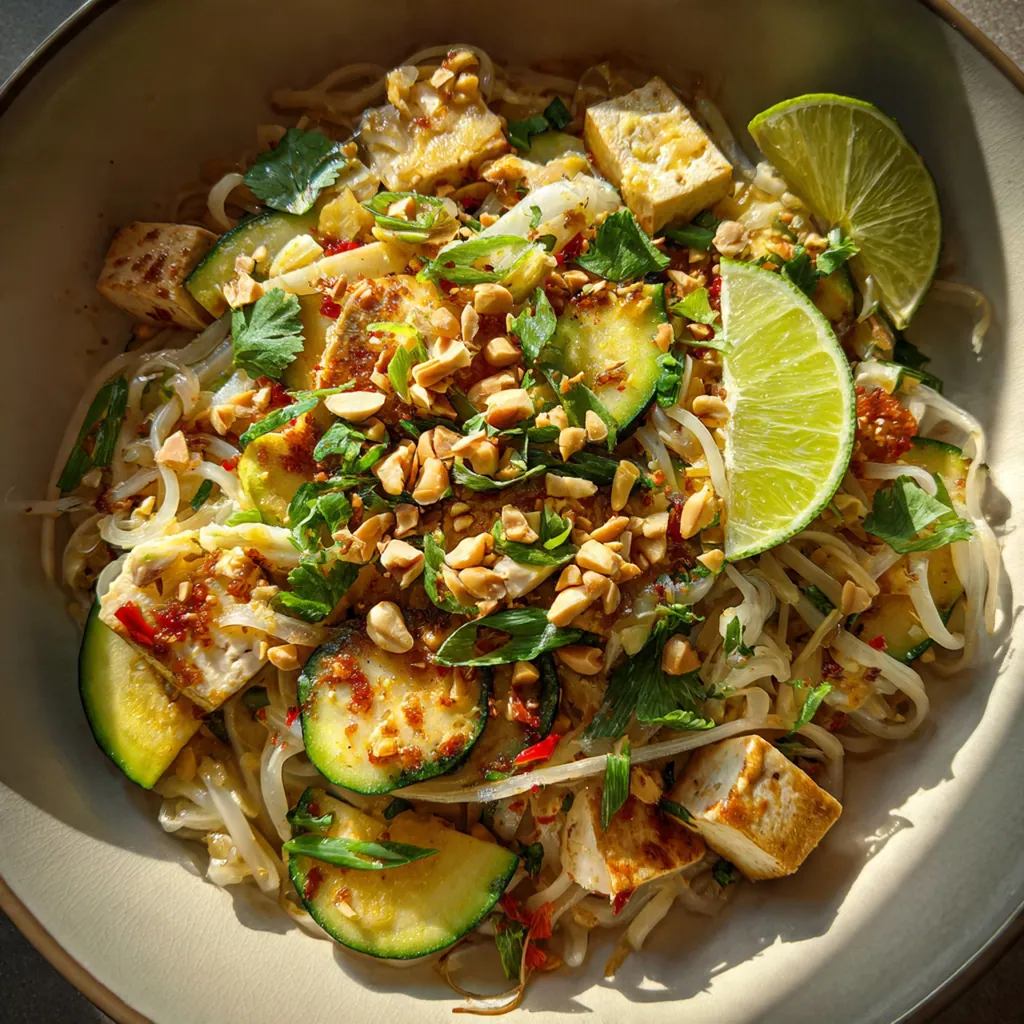
Divide the zucchini pad thai among four plates. Top each serving with the remaining bean sprouts, chopped peanuts, fresh cilantro, and extra lime wedges on the side. I always add a final squeeze of lime right before eating for that bright pop.
You Must Know
- Salting the zucchini noodles is absolutely essential for avoiding a watery mess
- Prep all your sauce ingredients and toppings before you start cooking for smooth execution
- Keep the heat high and work quickly to maintain crunch in both vegetables and noodles
- That final squeeze of fresh lime right before eating makes all the flavors sing
- I learned the hard way that rushing the draining step leads to soggy disappointment every time.
Storage Tips
Store any leftover zucchini pad thai in an airtight container in the refrigerator for up to two days. The noodles will definitely release more liquid upon sitting, so reheat leftovers in a skillet over medium heat rather than the microwave to avoid a watery mess. Add a fresh squeeze of lime and some extra chopped peanuts right before serving to revive the flavors and bring back that just-made freshness.
Ingredient Substitutions
If you’re out of tamari or soy sauce, coconut aminos make an excellent soy-free alternative that still provides umami depth. For anyone avoiding nuts, swap the roasted peanuts for toasted sunflower seeds or even pumpkin seeds for that crucial crunch. If you don’t have fresh cilantro, a handful of fresh basil or even Thai basil will bring a different but delicious herbal note to the dish. For the protein, I’ve successfully added cooked shrimp or tofu cubes during the vegetable cooking step when I want something more substantial.
Serving Suggestions
I love serving this with extra lime wedges for squeezing and a simple Thai cucumber salad on the side for extra crunch and freshness. A cold Thai iced tea or coconut water makes it feel like a complete Thai-inspired meal experience. For a more substantial dinner, pair it with some grilled chicken skewers or extra tofu. The bright, fresh flavors also pair beautifully with a crisp white wine if you’re feeling fancy.
Cultural Context
Pad Thai is Thailand’s most famous street food export, traditionally made with rice noodles, shrimp, tofu, eggs, and a signature tamarind-based sauce that balances sweet, sour, and salty perfectly. This zucchini version honors those essential flavor principles while adapting to modern dietary preferences for lower carbohydrates and more vegetables. The spirit of Thai cooking is all about balancing contrasting flavors and textures, which this dish achieves beautifully. It’s a testament to how traditional recipes can evolve while keeping their soul intact, making authentic Thai flavors accessible to more home cooks.
Pro Tips
- Don’t skip salting the zucchini noodles—this crucial step prevents a watery dish
- Have all your sauce ingredients and toppings prepped before you start cooking (mise en place)
- Keep the heat high and cook quickly to maintain the crunch of the vegetables and noodles
- For extra protein, add cooked shrimp or tofu cubes during the vegetable cooking step
- Use a spiralizer with multiple blade options for the best noodle texture—ribbons work great …
- I always make extra sauce because I love tossing mine with extra lime juice right before ser…
Frequently Asked Questions
To prevent watery zucchini noodles in your Zucchini Pad Thai, you can salt the spiralized noodles and let them sit for 10 minutes, then squeeze out excess moisture with a clean kitchen towel. Alternatively, sauté them quickly over high heat just until they’re tender-crisp. Don’t overcook them, as this releases more water.
Zucchini Pad Thai is best enjoyed fresh. However, you can prep the ingredients ahead of time: spiralize the zucchini, chop the vegetables, and mix the sauce. Store them separately in the fridge for up to 2 days. Cook the noodles and toss with sauce just before serving for the best texture.
For a vegetarian/vegan alternative to fish sauce in this Zucchini Pad Thai, you can use additional tamari or soy sauce mixed with a splash of lime juice or rice vinegar to replicate the salty-umami flavor. For a more complex flavor, a mixture of soy sauce and a bit of mushroom powder works well.
The Zucchini Pad Thai is ready when the zucchini noodles are just tender but still have a slight bite (al dente), which usually takes about 2-3 minutes of sautéing. The sauce should coat the noodles evenly, and the eggs should be fully cooked. The entire dish comes together in under 20 minutes of cooking time.
Zucchini Pad Thai is a complete meal on its own, but you can serve it with extra lime wedges, crushed red pepper flakes for heat, or a side of fresh Thai cucumber salad. For a more substantial meal, pair it with grilled chicken or shrimp skewers, which complement the Thai flavors beautifully.